
The African continent supports one of the world’s most abundant mammal populations. These populations are, however, facing severe declines, and some of them have even recently gone extinct, such as the northern white rhino (Ceratotherium simum cottoni) and the western black rhino (Diceros bicornis longipes). Conservation efforts are incredibly important for the success and recovery of many different species throughout Africa, which can be supported by wildlife based tourism (WBT).
In Africa, WBT generates roughly US$29 billion annually and helps to push funding for conservation efforts and protection of wildlife habitats. Wildlife also generates foreign funding for conservation efforts resulting in donor contributions accounting for >30% of all protected areas in Africa. Due to the high tourism rates in sub-saharan countries such as South Africa, Kenya and Botswana, these areas receive the most funding compared to other regions in Africa. For instance, in the southern region of Africa, South Africa receives $57.59 million and Botswana $42.26 million annually from governments and donors towards protected areas while in the western/central regions, countries such as the Central African Republic and Cameroon receive only $3.66 and $3.42 million annually.
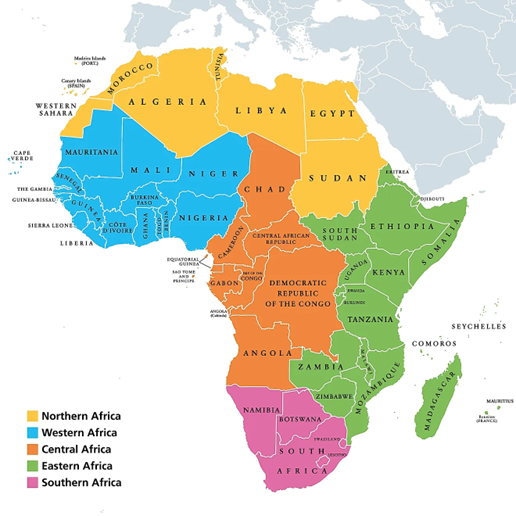
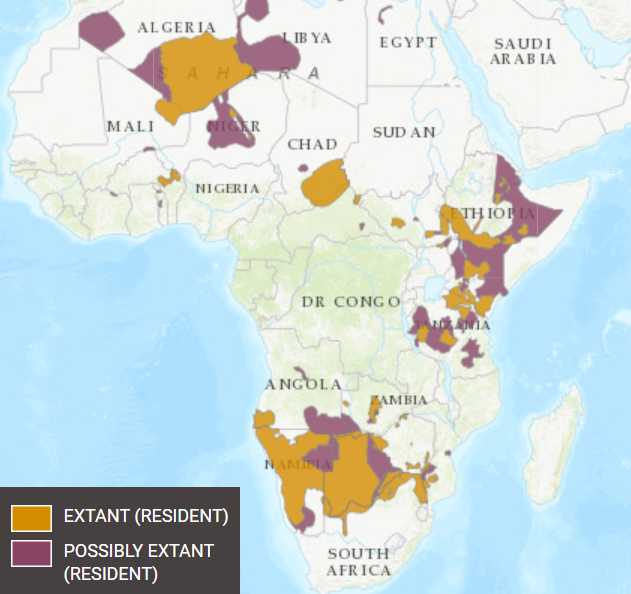
This poses an issue for the species inhabiting these regions. As a whole, West and Central Africa is home to roughly 2,471 mammal, amphibian and bird species, with around 10% of them threatened with extinction. Habitat loss has fragmented and isolated many populations. An example of this is the lion (Panthera leo) population in West africa. Currently there are two subspecies of lions, the northern subspecies Panthera leo leo (West, Central and Asiatic lion populations) and the southern subspecies Panthera leo melanochaita (East and southern lion populations). In West Africa, over 99% of the lion’shistorical range has been lost. Only around 400 individuals remain in the wild, and they are considered Critically Endangered. In contrast, 80% of the lion species resides in eastern and southern Africa and these populations are considered Vulnerable.
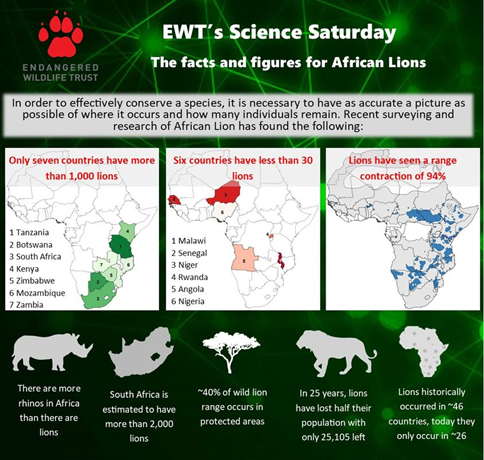
Unfortunately, this trend isn’t only seen in lion populations. West African subpopulations of African Wild Dog (Lycaon pictus), Cheetah (Acinonyx jubatus), Giraffe (Giraffa camelopardalis) are all Critically Endangered whilst their sub-saharan counterparts are Endangered (African Wild Dog) and Vulnerable (Cheetah and Giraffe).The largest populations of African Wild Dogs remain in southern Africa and East Africa. With a population of ~ 1,400 individuals in total, only an estimated 70 of those individuals reside in West africa. Alongside African Wild Dog populations, Cheetah and giraffe populations are higher in the Southern region of Africa with 61% of cheetah populations living in southern Africa, and Namibia and South Africa holding the highest population numbers of giraffe. There has also been a rapid decline in population numbers of African forest elephant, loxodonta cyclotis (central and western africa) and African savanna elephant, loxodonta africana (sub-saharan africa). African forest elephants have declined by more than 86% over a period of 31 years, while the population of African savanna elephants declined by at least 60% over the last 50 years. Many countries in the western region of Africa, such as Gambia, Mali, Mauritania, and Senegal, have lost a number of their native mammal species, including the Dama Gazelle (Nanger dama) and Dryad Monkey (Cercopithecus dryas), whose population numbers are now down to only a few 100 individuals in the wild.
Ultimately, funding is the largest factor in the success of wildlife conservation.
Without the high revenues from tourism, governments, NGOs, philanthropists, etc., West and Central Africa will simply not receive the same amount of attention and effort seen in sub-saharan Africa. With the unsettling conflict, tourism to these areas is less likely, resulting in less wildlife based tourism funding and conservation programs being established. To achieve quality conservation throughout Africa, governments and other funding bodies need to work together to take collective action towards sustainable conservation and the distribution of funding. Investing more financial resources into Africa’s protected areas would not only aid species conservation and their ecosystems, but also generate social and economic benefits for Africa at large.